Synonyms for Sweets: 40 Tasty Alternatives and Examples
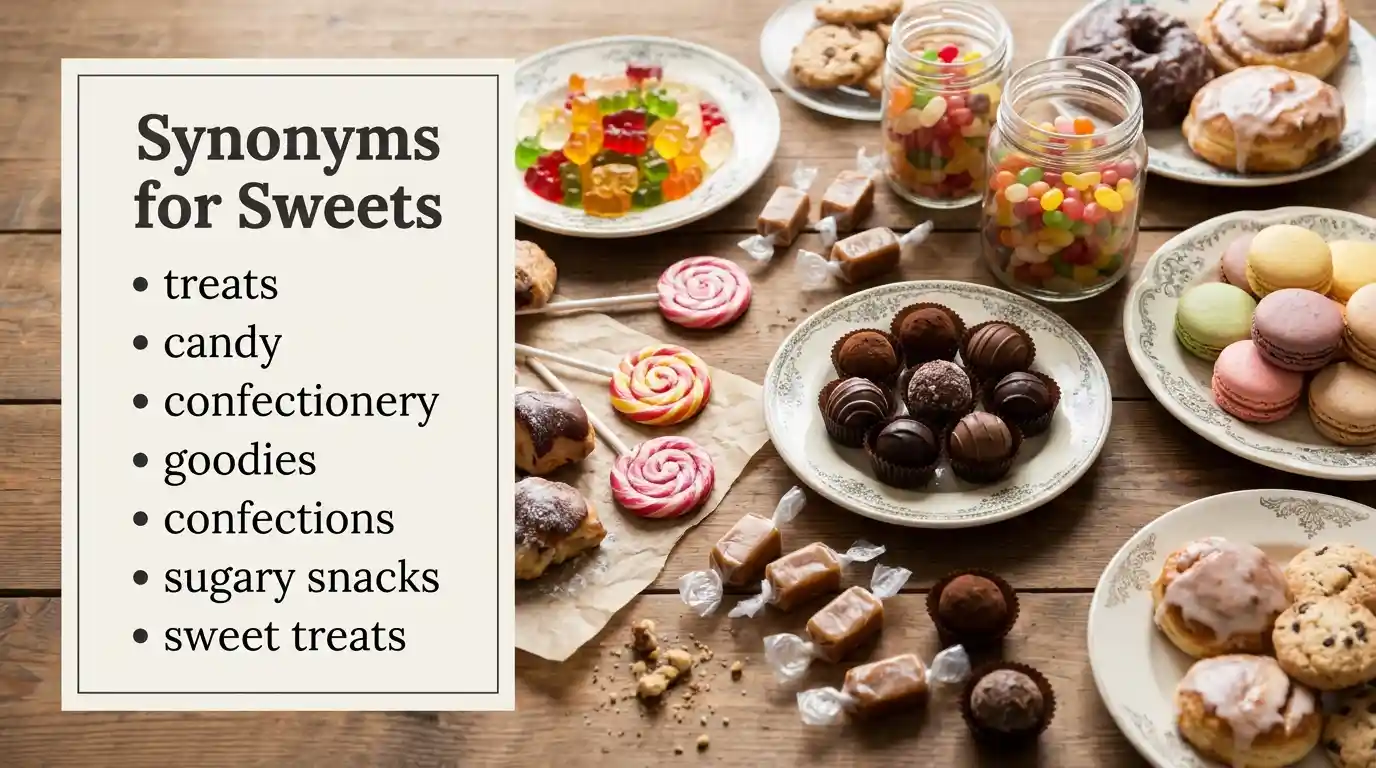
Synonyms for sweets include treats, candy, confectionery, confections, goodies, and sugary snacks. The best alternative depends on the food and context. In British English, sweets usually means candy, while desserts refers to sweet dishes served after a meal. More specific words, such as caramels, chocolates, and pastries, help describe particular kinds of sweet food accurately.
Imagine opening a gift box filled with chocolates or choosing a favorite snack at a corner shop. You might call these foods sweets, treats, or goodies, depending on the situation. Each word gives the reader a slightly different impression.
For example, confectionery sounds more formal than candy, while treats feels friendly and casual. Choosing the right term makes descriptions clearer and helps you avoid repeating the same word.
This guide to synonyms for sweets helps students, bloggers, content writers, and everyday English users understand common alternatives, their pronunciation, and the situations in which each word fits naturally.
What Does “Sweets” Really Mean?
Sweets is a plural noun that commonly refers to sugary foods, especially small candies and confections. In British English, people often use it for individual pieces of candy, such as boiled sweets, toffees, and fruit-flavored candies. In American English, candy is the more common term for these foods.
The word can also refer more broadly to sweet foods, depending on the context. Someone offering sweets at a party might mean candy and chocolates, while a restaurant menu may use sweets to describe sweet dishes. The surrounding words help establish the intended meaning.
Part of Speech
- Noun: “The children shared their sweets.”
- Singular form: Sweet can describe a sweet food or confection, although its use as a countable noun varies by context and region.
- Plural form: Sweets commonly refers to multiple pieces of candy or a category of sweet foods.
Connotative Meaning of Sweets
(Connotation is the emotional feeling or association a word carries beyond its basic definition.)
Positive tone: Sweets can suggest enjoyment, celebration, childhood memories, gifts, and small rewards. Words such as treats and goodies often reinforce this pleasant feeling.
Neutral tone: In recipes, shop descriptions, and everyday conversation, sweets can simply identify a category of food without expressing a particular opinion.
Negative tone: In discussions about nutrition, the word may be associated with excessive sugar or unhealthy eating habits. Terms such as sugary snacks can sound more factual or health-focused.
Etymology and Pronunciation
The word sweet comes from Old English swēte, meaning pleasing to the taste or senses. Its history connects the modern word with ideas of pleasant flavor and enjoyment. The plural form sweets became an everyday term for sugary foods, particularly in British English.
Historical Development
- Old English (c. 450–1100): Swēte described something sweet, pleasant, or agreeable.
- Middle English (c. 1100–1500): Forms related to swete continued to describe pleasant tastes and sensations.
- Modern English (1500–present): Sweet retained its taste-related meaning and developed broader uses. The plural sweets became a familiar name for candy in British English.
Pronunciation (US and UK)
- US IPA: /swiːts/
- UK IPA: /swiːts/
- Syllables: sweets — one syllable.
Affixation Pattern
- Root: sweet
- Prefix: None.
- Suffix: The plural ending -s.
- Word formation: Sweet + -s = sweets.
Synonyms for Sweets: 40 Alternatives by Meaning
Not every word below is an exact substitute for sweets. Some refer to candy generally, while others name particular confections, baked goods, or desserts. Use the specific terms when you know what kind of food you mean.
General Words for Sweet Foods
1. Treats
US pronunciation: /triːts/
UK pronunciation: /triːts/
Meaning: Treats are enjoyable foods that people eat for pleasure, often on special occasions or as a small reward.
Examples:
- We bought some treats for the children.
- She brought sweet treats to the office party.
2. Goodies
US pronunciation: /ˈɡʊdiz/
UK pronunciation: /ˈɡʊdiz/
Meaning: Goodies are appealing or enjoyable things, including sweet snacks and candies.
Examples:
- The gift bag was filled with chocolate goodies.
- We picked up some goodies for the movie night.
3. Confections
US pronunciation: /kənˈfekʃənz/
UK pronunciation: /kənˈfekʃənz/
Meaning: Confections are prepared sweet foods, especially candies and elaborate sugar-based treats.
Examples:
- The shop displays handmade confections in glass jars.
- The festival featured colorful fruit-flavored confections.
4. Confectionery
US pronunciation: /kənˈfekʃəˌneri/
UK pronunciation: /kənˈfekʃənəri/
Meaning: Confectionery refers to candy and other prepared sweet products, or the business of making and selling them.
Examples:
- The store has a large confectionery section.
- She studies traditional confectionery techniques.
5. Sweet Treats
US pronunciation: /swiːt triːts/
UK pronunciation: /swiːt triːts/
Meaning: Sweet treats are sugary foods enjoyed for pleasure rather than as a main meal.
Examples:
- The bakery prepares sweet treats for every celebration.
- We served sweet treats after the family dinner.
6. Sugary Snacks
US pronunciation: /ˈʃʊɡəri snæks/
UK pronunciation: /ˈʃʊɡəri snæks/
Meaning: Sugary snacks are small foods that contain considerable sugar and are often eaten between meals.
Examples:
- He replaced sugary snacks with fresh fruit.
- The children packed a few sugary snacks for the trip.
7. Candies
US pronunciation: /ˈkændiz/
UK pronunciation: /ˈkændiz/
Meaning: Candies are individual pieces of sweet confectionery, especially in American English.
Examples:
- She filled a bowl with colorful candies.
- The children traded candies after the parade.
8. Candy
US pronunciation: /ˈkændi/
UK pronunciation: /ˈkændi/
Meaning: Candy is a common American English term for sweet confections made primarily with sugar or other sweet ingredients.
Examples:
- He bought candy for the Halloween visitors.
- This shop sells candy in many different flavors.
Chocolate and Sugar-Based Confections
9. Chocolates
US pronunciation: /ˈtʃɑːkləts/
UK pronunciation: /ˈtʃɒkləts/
Meaning: Chocolates are pieces of chocolate or chocolate-based confections, often filled with nuts, caramel, or cream.
Examples:
- She gave her teacher a box of chocolates.
- The café serves homemade chocolates with coffee.
10. Chocolate Truffles
US pronunciation: /ˈtʃɑːklət ˈtrʌfəlz/
UK pronunciation: /ˈtʃɒklət ˈtrʌfəlz/
Meaning: Chocolate truffles are rich, usually round confections made with chocolate ganache and often coated in cocoa or other toppings.
Examples:
- We served chocolate truffles at the wedding.
- He made dark chocolate truffles for his friends.
11. Bonbons
US pronunciation: /ˈbɑːnˌbɑːnz/
UK pronunciation: /ˈbɒnˌbɒnz/
Meaning: Bonbons are small sweet confections that may have a chocolate coating or a soft, sugary center.
Examples:
- The confectioner arranged the bonbons in neat rows.
- We sampled fruit-filled bonbons at the market.
12. Pralines
US pronunciation: /ˈpreɪliːnz/
UK pronunciation: /ˈprɑːliːnz/
Meaning: Pralines are confections made with nuts and sugar or chocolate, with recipes varying by region.
Examples:
- The shop is famous for its pecan pralines.
- She packed a few pralines in a gift box.
13. Fudge
US pronunciation: /fʌdʒ/
UK pronunciation: /fʌdʒ/
Meaning: Fudge is a rich, soft confection made with sugar and ingredients such as butter, milk, or chocolate.
Examples:
- We bought a square of chocolate fudge.
- Her homemade fudge makes a popular holiday gift.
14. Caramels
US pronunciation: /ˈkærəmɛlz/
UK pronunciation: /ˈkærəməlz/
Meaning: Caramels are chewy or soft sweets made with caramelized sugar, often combined with butter or cream.
Examples:
- The children chose salted caramels from the jar.
- She wrapped the caramels in small pieces of wax paper.
15. Toffees
US pronunciation: /ˈtɔːfiz/
UK pronunciation: /ˈtɒfiz/
Meaning: Toffees are chewy or hard sweets made by heating sugar with butter and sometimes other ingredients.
Examples:
- My grandfather keeps toffees in his desk drawer.
- The shop sells traditional English toffees.
16. Hard Candies
US pronunciation: /hɑːrd ˈkændiz/
UK pronunciation: /hɑːd ˈkændiz/
Meaning: Hard candies are solid sweets designed to dissolve slowly in the mouth.
Examples:
- She offered us peppermint hard candies.
- Hard candies came in several fruit flavors.
17. Boiled Sweets
US pronunciation: /bɔɪld swiːts/
UK pronunciation: /bɔɪld swiːts/
Meaning: Boiled sweets are hard sugar-based candies made by heating a sugar mixture to a high temperature; the term is especially common in British English.
Examples:
- He bought a bag of boiled sweets at the village shop.
- Lemon and mint are popular boiled sweet flavors.
18. Lollipops
US pronunciation: /ˈlɑːliˌpɑːps/
UK pronunciation: /ˈlɒliˌpɒps/
Meaning: Lollipops are hard or chewy candies attached to sticks for easy holding.
Examples:
- The nurse gave each child a lollipop.
- Brightly colored lollipops decorated the party table.
19. Gummies
US pronunciation: /ˈɡʌmiz/
UK pronunciation: /ˈɡʌmiz/
Meaning: Gummies are soft, chewy sweets often shaped like animals, fruits, or other small figures.
Examples:
- He packed fruit gummies in his lunch bag.
- The children chose gummy bears from the candy jar.
20. Gumdrops
US pronunciation: /ˈɡʌmˌdrɑːps/
UK pronunciation: /ˈɡʌmˌdrɒps/
Meaning: Gumdrops are small, soft, chewy candies usually coated in sugar.
Examples:
- She decorated the gingerbread house with gumdrops.
- The bowl contained orange, lemon, and cherry gumdrops.
21. Jelly Beans
US pronunciation: /ˈdʒeli biːnz/
UK pronunciation: /ˈdʒeli biːnz/
Meaning: Jelly beans are small, bean-shaped candies with a chewy center and a firm, colorful coating.
Examples:
- He sorted the jelly beans by color.
- We filled the glass jar with jelly beans.
22. Marshmallows
US pronunciation: /ˈmɑːrʃˌmɛloʊz/
UK pronunciation: /ˈmɑːʃˌmæləʊz/
Meaning: Marshmallows are soft, spongy confections made from sugar, water, and a setting agent such as gelatin.
Examples:
- We toasted marshmallows around the campfire.
- She added marshmallows to her hot chocolate.
23. Nougat
US pronunciation: /ˈnuːɡət/
UK pronunciation: /ˈnuːɡɑː/
Meaning: Nougat is a chewy or firm confection commonly made with sugar or honey, nuts, and whipped egg whites.
Examples:
- The chocolate bar contains almonds and nougat.
- He chose a piece of soft nougat from the display.
24. Brittle
US pronunciation: /ˈbrɪtəl/
UK pronunciation: /ˈbrɪtəl/
Meaning: Brittle is a hard, crunchy confection made by setting cooked sugar with ingredients such as peanuts or other nuts.
Examples:
- Grandma made peanut brittle for the holidays.
- The brittle snapped into small, crunchy pieces.
25. Taffy
US pronunciation: /ˈtæfi/
UK pronunciation: /ˈtæfi/
Meaning: Taffy is a soft, chewy candy made by stretching a cooked sugar mixture.
Examples:
- We bought saltwater taffy during our seaside trip.
- The children chose taffy in several bright colors.
26. Fondant
US pronunciation: /ˈfɑːndənt/
UK pronunciation: /ˈfɒndənt/
Meaning: Fondant is a smooth sugar-based preparation used for filling or coating sweets and decorating cakes.
Examples:
- The baker covered the cake with white fondant.
- The chocolates had a soft fondant center.
27. Marzipan
US pronunciation: /ˈmɑːrtsɪpæn/
UK pronunciation: /ˈmɑːzɪpæn/
Meaning: Marzipan is a sweet almond paste used in candies, cake decorations, and small molded confections.
Examples:
- She shaped the marzipan into tiny fruits.
- The Christmas cake was decorated with marzipan.
28. Pastilles
US pronunciation: /pæˈstɪlz/
UK pronunciation: /pæˈstɪlz/
Meaning: Pastilles are small, often round or flat pieces of flavored candy or a soft preparation that dissolves in the mouth.
Examples:
- He bought fruit-flavored pastilles at the shop.
- The tin held mint pastilles for freshening the breath.
29. Lo zenges
US pronunciation: /ˈlɑːzəndʒɪz/
UK pronunciation: /ˈlɒzɪndʒɪz/
Meaning: Lozenges are small, often flavored pieces designed to dissolve slowly in the mouth; some are candies, while others are intended for soothing a sore throat.
Examples:
- She chose lemon lozenges from the counter.
- The shop sells honey-flavored lozenges.
Desserts and Baked Sweet Foods
30. Desserts
US pronunciation: /dɪˈzɜːrts/
UK pronunciation: /dɪˈzɜːts/
Meaning: Desserts are sweet dishes typically served at the end of a meal.
Examples:
- We ordered two desserts to share.
- The restaurant offers fruit desserts and chocolate cake.
31. Puddings
US pronunciation: /ˈpʊdɪŋz/
UK pronunciation: /ˈpʊdɪŋz/
Meaning: Puddings are sweet or savory dishes, but in British English the word often refers to sweet dishes served as dessert.
Examples:
- The children asked for chocolate pudding.
- Sticky toffee pudding is a popular British dessert.
32. Pastries
US pronunciation: /ˈpeɪstriz/
UK pronunciation: /ˈpeɪstriz/
Meaning: Pastries are baked foods made with pastry dough and may contain sweet fillings, fruit, cream, or chocolate.
Examples:
- The bakery sells fresh pastries every morning.
- We shared apple pastries with our tea.
33. Cakes
US pronunciation: /keɪks/
UK pronunciation: /keɪks/
Meaning: Cakes are sweet baked foods commonly made from flour, sugar, eggs, and other ingredients.
Examples:
- They served three cakes at the birthday party.
- The café makes small chocolate cakes each day.
34. Cookies
US pronunciation: /ˈkʊkiz/
UK pronunciation: /ˈkʊkiz/
Meaning: Cookies are small, usually sweet baked items; the word is especially common in American English.
Examples:
- She baked chocolate chip cookies for her neighbors.
- The children left cookies beside the milk.
35. Biscuits
US pronunciation: /ˈbɪskɪts/
UK pronunciation: /ˈbɪskɪts/
Meaning: Biscuits are small baked items, often crisp and sweet in British English; American English usually uses cookies for similar sweet foods.
Examples:
- We had tea and biscuits in the afternoon.
- The tin was full of buttery biscuits.
36. Cupcakes
US pronunciation: /ˈkʌpˌkeɪks/
UK pronunciation: /ˈkʌpˌkeɪks/
Meaning: Cupcakes are small individual cakes, often decorated with icing or frosting.
Examples:
- She brought vanilla cupcakes to the school event.
- The bakery decorated the cupcakes with colorful frosting.
37. Doughnuts
US pronunciation: /ˈdoʊˌnʌts/
UK pronunciation: /ˈdəʊˌnʌts/
Meaning: Doughnuts are ring-shaped or filled sweet foods that are usually fried, though baked versions also exist.
Examples:
- He bought glazed doughnuts for breakfast.
- The children shared a box of jam-filled doughnuts.
38. Petit Fours
US pronunciation: /ˌpɛti ˈfɔːrz/
UK pronunciation: /ˌpɛti ˈfʊəz/
Meaning: Petit fours are small, decorative cakes or confections often served at parties, receptions, and formal gatherings.
Examples:
- The hotel served petit fours with afternoon tea.
- Tiny petit fours decorated the dessert table.
39. Meringues
US pronunciation: /məˈræŋz/
UK pronunciation: /məˈræŋz/
Meaning: Meringues are light, sweet preparations made mainly from whipped egg whites and sugar, often baked until crisp.
Examples:
- The baker topped the dessert with small meringues.
- Lemon meringues were served after dinner.
40. Candied Fruit
US pronunciation: /ˈkændid fruːt/
UK pronunciation: /ˈkændɪd fruːt/
Meaning: Candied fruit is fruit preserved or coated with sugar, often used in desserts, baking, and confectionery.
Examples:
- The fruitcake contained candied fruit and nuts.
- She used candied orange peel to decorate the chocolates.
Synonyms for Sweets by Tone
The right word depends on the situation, audience, and feeling you want to convey. A casual phrase may suit a family conversation, while a technical term works better in a formal description.
Positive and Appealing
- Treats
- Goodies
- Sweet treats
- Delicacies
- Chocolates
These words often highlight enjoyment, quality, or the pleasure of eating something special.
Neutral and Everyday
- Candy
- Sweets
- Desserts
- Cakes
- Cookies
- Pastries
- Candies
These are straightforward terms for common foods. Their meaning is usually clear from the context.
Formal or Food-Focused
- Confectionery
- Confections
- Petit fours
- Pastilles
- Candied fruit
These terms are useful in menus, recipes, product descriptions, and writing about food preparation.
Playful or Informal
- Goodies
- Treats
- Gummies
- Jelly beans
- Lollipops
These words work well in friendly conversation, party descriptions, and informal writing. They often name specific foods or create a cheerful impression.
There is no inherently negative synonym for sweets that fits every context. When discussing health concerns, phrases such as sugary snacks or sugar-rich foods are more precise than choosing a negative-sounding word.
“Sweets” vs. Close Alternatives
Sweets vs. Candy
Both words can refer to small sugary confections. Sweets is especially common in British English, while candy is the standard everyday term in American English. Use the regional form that suits your audience.
Sweets vs. Desserts
Sweets often means candy in British English, but desserts usually refers to sweet dishes served after a meal. A chocolate bar is candy; a slice of chocolate cake served after dinner is a dessert.
Sweets vs. Confectionery
Sweets is an everyday term. Confectionery is more formal and refers to candy and other prepared sweet products, or the industry that makes them. It suits food-related professional writing better than casual conversation.
How “Sweets” Changes by Context
Daily Conversation
In conversation, people usually choose the simplest word. British speakers might ask, “Would you like some sweets?” while American speakers are more likely to say, “Would you like some candy?” Treats works in both varieties when the exact food is not important.
Writing and Blogging
Food bloggers can make descriptions more vivid by naming the actual food. Instead of writing that a bakery sells many sweets, describe its caramel fudge, fruit pastries, chocolate truffles, or iced cupcakes. Specific terms help readers picture the food.
Suggested internal link: [internal link: synonyms for delicious → synonyms-for-delicious]
Professional or Academic Writing
Use accurate, specific vocabulary in professional or academic contexts. Confectionery fits discussions of food production, while sugar-rich foods may suit a nutrition article. Avoid calling all desserts candy, because the categories do not mean the same thing.
Creative or Informal Use
In a story, social caption, or friendly message, goodies and sweet treats can sound warm and inviting. For a more vivid description, name the food and its qualities, such as crunchy peanut brittle, smooth chocolate truffles, or soft caramel candies.
Common Mistakes Learners Make
1. Using “Candy” for Every Sweet Food
Candy usually refers to sugar-based confections. It does not naturally describe every cake, pudding, or pastry.
Correction: Use desserts for sweet dishes served after a meal and baked goods for foods such as cakes and pastries.
2. Treating “Sweets” and “Desserts” as Exact Synonyms
The words overlap, but they are not always interchangeable. In British English, sweets often means candy, whereas desserts usually refers to the final course of a meal.
Correction: Decide whether you mean candy or a sweet dish before choosing a replacement.
3. Using “Confectionery” in Casual Conversation
Confectionery is correct, but it can sound formal when you are talking about a few pieces of candy.
Correction: Use sweets, candy, or treats in everyday speech.
4. Assuming “Goodies” Always Means Sweets
Goodies can describe appealing things other than food, including gifts, toys, or savory snacks.
Correction: Say sweet goodies if the context does not make the meaning clear.
5. Using “Biscuits” and “Cookies” Without Considering Region
British English commonly uses biscuits for crisp baked items, including many sweet varieties. American English usually uses cookies for similar foods.
Correction: Match the term to your audience, especially when writing for readers from different countries.
Register Notes
- Formal writing: Use confectionery, confections, or the precise name of the food.
- Informal speech: Use sweets, candy, treats, or goodies, depending on regional usage.
- Food writing: Prefer specific names such as caramels, truffles, or pastries when you know which food is meant.
Real-Life Examples Using Sweets and Their Alternatives
Workplace
You are bringing food to a team meeting. Saying “I brought some treats” sounds friendly and broad. Saying “I brought chocolate truffles” tells colleagues exactly what they can expect.
Social Situations
At a birthday party, goodies can refer to the appealing items in a party bag. If you are describing a bowl of candy, sweets or candies is more specific.
Media and Pop Culture
A food review might describe a shop’s handmade confections, while a family film might show children sharing candy. The word choice helps establish the setting and tone.
Writing or Storytelling
A character who buys boiled sweets may evoke a traditional British shop. A character choosing cupcakes or doughnuts creates a different image. Specific words help readers picture the scene.
Practice Exercise: Choose the Best Synonym
Choose the word that best fits each situation.
1. A British child asks for small pieces of candy from a shop. Which word fits best?
A. Sweets
B. Savories
C. Ingredients
D. Main courses
2. An American parent buys sugary snacks for Halloween visitors. Which word is most natural?
A. Puddings
B. Candy
C. Pastries
D. Biscuits
3. A restaurant serves a sweet dish after dinner. Which word is most suitable?
A. Confectionery
B. Candy
C. Dessert
D. Gumdrops
4. A formal article discusses the production of candy and sugar-based products. Which term fits best?
A. Goodies
B. Treats
C. Snacks
D. Confectionery
5. A baker makes small, rich chocolate confections shaped into balls. What are they likely to be?
A. Truffles
B. Biscuits
C. Doughnuts
D. Lollipops
6. A shop sells chewy sweets made with sugar and butter. Which word fits?
A. Meringues
B. Toffees
C. Pastries
D. Cakes
7. A child receives a small reward for helping at home. Which general word sounds natural?
A. Confectionery
B. Sugar production
C. Treat
D. Ingredients
8. A bakery decorates small individual cakes with icing. What should the menu call them?
A. Pastilles
B. Brittle
C. Boiled sweets
D. Cupcakes
9. A dessert contains fruit preserved in sugar. Which phrase describes that ingredient?
A. Candied fruit
B. Hard candy
C. Nougat
D. Taffy
10. You are writing for British readers about crisp, sweet baked items served with tea. Which term may fit best?
A. Candy
B. Biscuits
C. Lollipops
D. Caramels
11. A child chooses small, colorful, bean-shaped candies. What are they?
A. Pralines
B. Marshmallows
C. Jelly beans
D. Petit fours
12. A professional food description needs a precise name for a soft almond paste used to decorate cakes. Which word is correct?
A. Fudge
B. Nougat
C. Taffy
D. Marzipan
Reflection Task
Write three original sentences using different alternatives for sweets. Include one sentence about a casual snack, one about a dessert, and one about a specific confection. Check that each word accurately describes the food.
Answer Key: 1-A, 2-B, 3-C, 4-D, 5-A, 6-B, 7-C, 8-D, 9-A, 10-B, 11-C, 12-D.
Conclusion
Learning synonyms for sweets helps you describe food more precisely. Words such as candy, treats, confectionery, and desserts have overlapping meanings, but they do not fit every situation equally well.
A wider vocabulary can strengthen your writing, blogging, speaking, and everyday communication. Practice these alternatives in emails, essays, recipes, and conversations to make your English more natural and specific.
To explore related meanings and choose the right word for your sentence, read more about synonyms for sweets. Try using a new alternative today, and pay attention to how its meaning changes with the context.

Daniel Mercer writes about measurements, dimensions, unit conversions, and the practical meaning of numbers in everyday life. His articles focus on explaining small and large measurements in clear language, using accurate conversions and useful comparisons to help readers develop an intuitive understanding of size and scale.