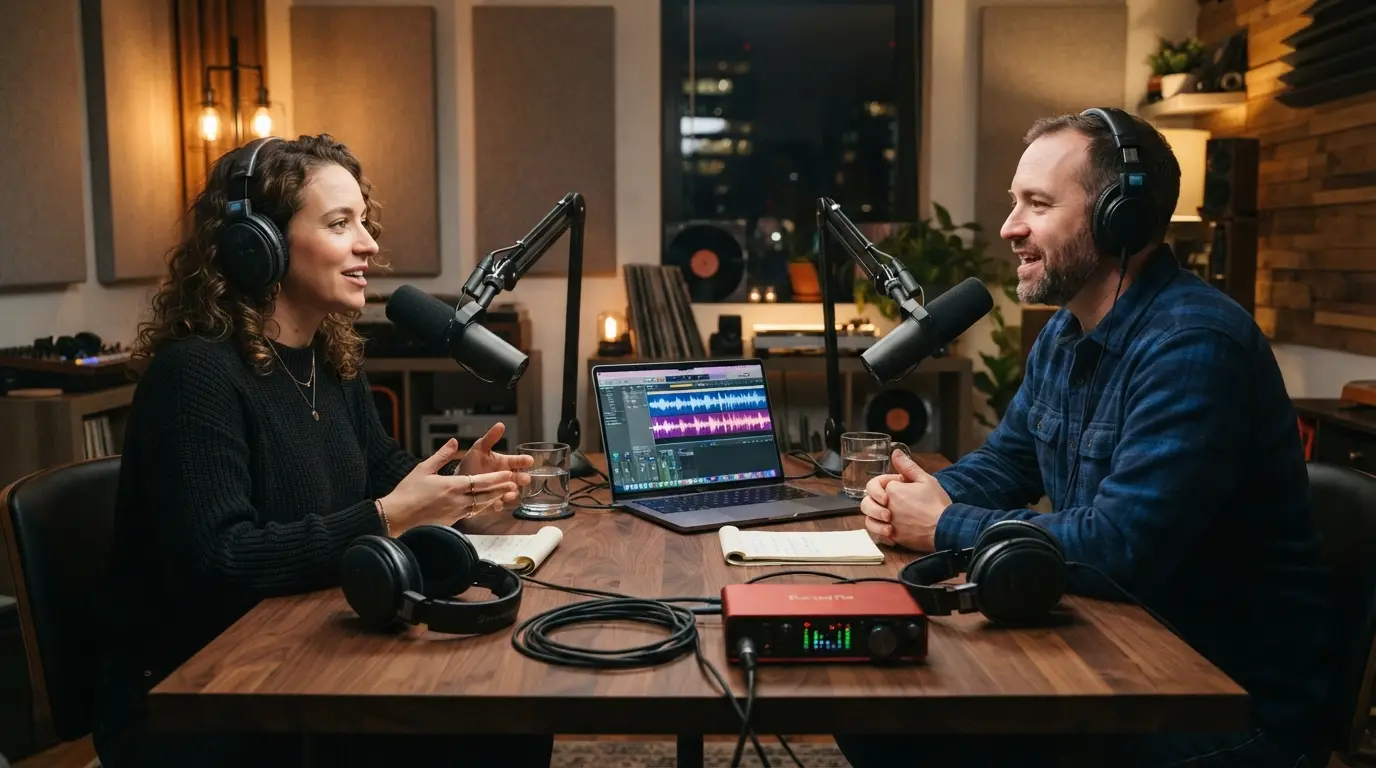
Synonyms for podcast become useful when you are writing about digital audio, online shows, interviews, or recorded conversations and want more variety.
Imagine telling a friend about something you heard online. You might call it a podcast, audio show, digital program, or recorded discussion.
Synonyms for podcast can help students, bloggers, and content writers avoid repeating the same word while keeping their meaning clear.
For daily English users, synonyms for podcast also make descriptions more natural. The best choice depends on the format, purpose, and audience.
What Does “Podcast” Really Mean?
A podcast is a digital program or recorded piece of content that people can listen to or watch online.
The word commonly refers to a series of episodes. Each episode may include interviews, conversations, storytelling, news, education, commentary, comedy, or other forms of spoken content.
Cambridge defines podcast as a digital radio-style program that can be downloaded or accessed online. It also recognizes podcast as a verb meaning to create and make such content available.
In modern English, however, the meaning is broader than traditional radio.
A podcast can be:
- an interview series
- a conversational show
- a news program
- an educational series
- a storytelling series
- a comedy program
- a video podcast
- an audio discussion
- a recorded lecture
- a serialized documentary
Part of Speech
Podcast can function as both a noun and a verb.
As a noun:
“I listened to a podcast about history.”
As a verb:
“She podcasts about language learning.”
The noun refers to the content or program. The verb describes the act of producing or distributing that content. Cambridge also lists both noun and verb uses.
Connotative Meaning
Connotation (the feeling, association, or idea that a word suggests beyond its basic meaning) is generally neutral for podcast.
Positive Tone
A podcast can suggest learning, entertainment, connection, creativity, or discovery.
For example:
“I found an excellent podcast about astronomy.”
The sentence creates a positive impression because the speaker values the content.
Negative Tone
The word podcast itself is not negative.
However, context can create a negative impression.
For example:
“That podcast spreads misleading claims.”
The negative meaning comes from the content, not from the word podcast.
Neutral Tone
Most uses are neutral.
For example:
“I listened to a podcast during my commute.”
Here, the speaker simply identifies a type of media.
Etymology of “Podcast”
Unlike many older English words, podcast does not have an Old English or Middle English history.
It is a modern compound word associated with iPod and broadcast. Merriam-Webster notes that the word appeared in 2004 as a blend of “pod” and “broadcast.”
Old English: 450–1100
The word podcast did not exist in Old English.
The technology required for podcasts developed many centuries later, so there is no Old English form of the modern word.
Middle English: 1100–1500
Podcast also did not exist during the Middle English period.
People communicated through speech, manuscripts, public performances, and other forms of media available at the time.
Modern English: 1500–Present
The modern word developed in the early 21st century.
It became associated with the growth of downloadable digital audio and later expanded to include streaming and video-based formats.
The word is commonly understood today as a digital show or series of recorded episodes.
Pronunciation of “Podcast”
- US: /ˈpɑːd.kæst/
- UK: /ˈpɒd.kɑːst/
Cambridge gives these US and UK pronunciations for podcast.
Syllables
pod-cast
Affixation Pattern of “Podcast”
Root: pod + cast
Prefix: None
Suffix: None
The word is best understood as a blend or compound formation rather than a traditional root-prefix-suffix construction.
The “pod” element is associated with Apple’s iPod, while “cast” comes from broadcast.
Synonyms for Podcast
There is an important distinction to understand before choosing a synonym.
Podcast has become a specific media format. Because of that, there are relatively few perfect one-word synonyms.
Words such as audio show, digital program, online broadcast, and recorded show can work in some contexts. Other terms, such as webcast or vodcast, describe related formats but are not always interchangeable with podcast.
The following alternatives are therefore grouped by how closely they match the meaning of podcast.
1. Audio Show
US: /ˈɔː.di.oʊ ʃoʊ/
UK: /ˈɔː.di.əʊ ʃəʊ/
Meaning: A show delivered primarily through recorded audio.
Examples:
- I found a great audio show about science.
- Her audio show features weekly interviews.
2. Digital Show
US: /ˈdɪdʒ.ə.t̬əl ʃoʊ/
UK: /ˈdɪdʒ.ɪ.təl ʃəʊ/
Meaning: A show created and distributed in digital form.
Examples:
- The comedian launched a new digital show.
- Their digital show reaches listeners around the world.
3. Online Show
US: /ˈɑːn.laɪn ʃoʊ/
UK: /ˈɒn.laɪn ʃəʊ/
Meaning: A show that is published or presented through the internet.
Examples:
- She hosts an online show about books.
- The online show attracts thousands of viewers.
4. Digital Program
US: /ˈdɪdʒ.ə.t̬əl ˈproʊ.ɡræm/
UK: /ˈdɪdʒ.ɪ.təl ˈprəʊ.ɡræm/
Meaning: A program distributed in digital form rather than through traditional broadcasting alone.
Examples:
- The station created a digital program for younger audiences.
- I listen to this digital program every week.
5. Online Program
US: /ˈɑːn.laɪn ˈproʊ.ɡræm/
UK: /ˈɒn.laɪn ˈprəʊ.ɡræm/
Meaning: A program made available through the internet.
Examples:
- The university produces an online program for students.
- Her online program focuses on history.
6. Audio Program
US: /ˈɔː.di.oʊ ˈproʊ.ɡræm/
UK: /ˈɔː.di.əʊ ˈprəʊ.ɡræm/
Meaning: Recorded spoken or musical content presented as a program.
Examples:
- The audio program includes interviews with researchers.
- I discovered the audio program through a friend.
7. Recorded Show
US: /rɪˈkɔːr.dɪd ʃoʊ/
UK: /rɪˈkɔː.dɪd ʃəʊ/
Meaning: A show that has been recorded so people can listen to or watch it later.
Examples:
- The recorded show is available online.
- We listened to the recorded show on the train.
8. Recorded Program
US: /rɪˈkɔːr.dɪd ˈproʊ.ɡræm/
UK: /rɪˈkɔː.dɪd ˈprəʊ.ɡræm/
Meaning: A program captured in advance for later listening or viewing.
Examples:
- The recorded program covers current events.
- I saved the recorded program for later.
9. Online Broadcast
US: /ˈɑːn.laɪn ˈbrɔːd.kæst/
UK: /ˈɒn.laɪn ˈbrɔːd.kɑːst/
Meaning: Content transmitted or made available through the internet.
Examples:
- The station released an online broadcast.
- We watched the online broadcast later.
10. Digital Broadcast
US: /ˈdɪdʒ.ə.t̬əl ˈbrɔːd.kæst/
UK: /ˈdɪdʒ.ɪ.təl ˈbrɔːd.kɑːst/
Meaning: A broadcast delivered through digital technology.
Examples:
- The digital broadcast reached an international audience.
- The organization produces a weekly digital broadcast.
11. Audio Broadcast
US: /ˈɔː.di.oʊ ˈbrɔːd.kæst/
UK: /ˈɔː.di.əʊ ˈbrɔːd.kɑːst/
Meaning: A broadcast delivered primarily through sound.
Examples:
- The audio broadcast featured a political interview.
- I listened to the audio broadcast on my phone.
12. Internet Radio Show
US: /ˈɪn.t̬ɚ.net ˈreɪ.di.oʊ ʃoʊ/
UK: /ˈɪn.tə.net ˈreɪ.di.əʊ ʃəʊ/
Meaning: A radio-style show distributed through the internet.
Examples:
- His internet radio show covers local music.
- We discovered the internet radio show last month.
13. Talk Show
US: /ˈtɔːk ʃoʊ/
UK: /ˈtɔːk ʃəʊ/
Meaning: A program centered on conversation, interviews, or discussion.
Examples:
- Her talk show features interesting guests.
- I listened to a talk show about technology.
14. Interview Show
US: /ˈɪn.t̬ɚ.vjuː ʃoʊ/
UK: /ˈɪn.tə.vjuː ʃəʊ/
Meaning: A show built mainly around interviews with guests.
Examples:
- His interview show features authors.
- The interview show has a relaxed style.
15. Conversation Series
US: /ˌkɑːn.vɚˈseɪ.ʃən ˈsɪr.iːz/
UK: /ˌkɒn.vəˈseɪ.ʃən ˈsɪə.riːz/
Meaning: A series of recorded conversations released as separate episodes.
Examples:
- The conversation series explores modern education.
- I enjoy this conversation series because it feels natural.
16. Discussion Series
US: /dɪˈskʌʃ.ən ˈsɪr.iːz/
UK: /dɪˈskʌʃ.ən ˈsɪə.riːz/
Meaning: A sequence of discussions published for an audience.
Examples:
- The discussion series covers environmental issues.
- Each episode belongs to the same discussion series.
17. Audio Series
US: /ˈɔː.di.oʊ ˈsɪr.iːz/
UK: /ˈɔː.di.əʊ ˈsɪə.riːz/
Meaning: A sequence of audio episodes released around a common theme.
Examples:
- The audio series tells the story of a lost expedition.
- I finished the entire audio series.
18. Digital Series
US: /ˈdɪdʒ.ə.t̬əl ˈsɪr.iːz/
UK: /ˈdɪdʒ.ɪ.təl ˈsɪə.riːz/
Meaning: A series of digital episodes released online.
Examples:
- The digital series examines famous inventions.
- She created a digital series about language.
19. Web Series
US: /ˈweb ˌsɪr.iːz/
UK: /ˈweb ˌsɪə.riːz/
Meaning: A series of episodes released on the internet.
Examples:
- The web series became popular among students.
- We watched the first episode of the web series.
Usage: Web series can be audio or video, although the term often suggests video content.
20. Webcast
US: /ˈweb.kæst/
UK: /ˈweb.kɑːst/
Meaning: A program or event transmitted over the internet.
Examples:
- The university hosted a live webcast.
- The webcast was available afterward.
Usage: Webcast is broader than podcast because it can describe live or recorded internet broadcasts.
21. Vodcast
US: /ˈvɑːd.kæst/
UK: /ˈvɒd.kɑːst/
Meaning: A video program distributed digitally through the internet.
Examples:
- The weekly vodcast includes interviews.
- Their vodcast combines discussion with video.
Usage: Vodcast is specifically associated with video content, so it should not automatically replace an audio podcast. Cambridge defines it as a digital video that can be downloaded or played online.
22. Audio Blog
US: /ˈɔː.di.oʊ blɑːɡ/
UK: /ˈɔː.di.əʊ blɒɡ/
Meaning: A blog presented primarily through recorded audio.
Examples:
- She turned her weekly blog into an audio blog.
- His audio blog discusses travel experiences.
23. Audio Journal
US: /ˈɔː.di.oʊ ˈdʒɝː.nəl/
UK: /ˈɔː.di.əʊ ˈdʒɜː.nəl/
Meaning: A recorded series in which someone shares thoughts, experiences, or observations.
Examples:
- Her audio journal documents life abroad.
- I listened to his audio journal during my commute.
24. Audio Diary
US: /ˈɔː.di.oʊ ˈdaɪ.ə.ri/
UK: /ˈɔː.di.əʊ ˈdaɪə.ri/
Meaning: A series of spoken recordings that document personal thoughts or experiences.
Examples:
- He keeps an audio diary while traveling.
- Her audio diary became part of the project.
25. Recorded Discussion
US: /rɪˈkɔːr.dɪd dɪˈskʌʃ.ən/
UK: /rɪˈkɔː.dɪd dɪˈskʌʃ.ən/
Meaning: A conversation that has been recorded for later listening.
Examples:
- The website published a recorded discussion with two historians.
- I listened to the recorded discussion yesterday.
26. Recorded Conversation
US: /rɪˈkɔːr.dɪd ˌkɑːn.vɚˈseɪ.ʃən/
UK: /rɪˈkɔː.dɪd ˌkɒn.vəˈseɪ.ʃən/
Meaning: A conversation captured in audio or video form.
Examples:
- The recorded conversation lasted an hour.
- The article includes a recorded conversation with the author.
27. Interview Series
US: /ˈɪn.t̬ɚ.vjuː ˈsɪr.iːz/
UK: /ˈɪn.tə.vjuː ˈsɪə.riːz/
Meaning: A sequence of interviews released as separate episodes.
Examples:
- The interview series features scientists from different fields.
- I listened to the entire interview series.
28. Audio Feature
US: /ˈɔː.di.oʊ ˈfiː.tʃɚ/
UK: /ˈɔː.di.əʊ ˈfiː.tʃə/
Meaning: A produced piece of audio content focused on a particular subject.
Examples:
- The station released an audio feature about the city.
- I heard an excellent audio feature about space.
29. Radio-Style Program
US: /ˈreɪ.di.oʊ staɪl ˈproʊ.ɡræm/
UK: /ˈreɪ.di.əʊ staɪl ˈprəʊ.ɡræm/
Meaning: A digital program that follows a format similar to traditional radio.
Examples:
- The podcast feels like a radio-style program.
- They produce a weekly radio-style program online.
30. Spoken-Word Series
US: /ˈspoʊ.kən wɝːd ˈsɪr.iːz/
UK: /ˈspəʊ.kən wɜːd ˈsɪə.riːz/
Meaning: A series built mainly around spoken language rather than written text.
Examples:
- The spoken-word series explores personal stories.
- I discovered a fascinating spoken-word series.
Synonyms for Podcast by Tone
Because podcast is a specific media format, tone is often created by the alternative you choose rather than by the word itself.
Positive or Engaging
These alternatives can make the content sound accessible or appealing:
- audio show
- showcase
- interview series
- conversation series
- audio feature
- digital series
For example, conversation series sounds personal and approachable.
Neutral
These are useful for straightforward descriptions:
- podcast
- audio program
- digital program
- recorded show
- online program
- audio series
- webcast
These terms work well in informational writing.
Formal or Professional
For academic, organizational, or professional contexts, consider:
- digital program
- audio program
- recorded discussion
- interview series
- online broadcast
- digital broadcast
- webcast
These terms can sound more descriptive and less conversational.
Playful or Informal
For casual writing, these can work well:
- audio show
- online show
- talk show
- web show
- audio series
The exact choice depends on the format of the content.
Podcast vs. Close Alternatives
Podcast vs. Audio Show
The term Podcast is the more specific modern media term.
Audio show is a descriptive phrase that focuses on the fact that the content is presented as a show through sound.
Use podcast when the content is actually distributed as a podcast.
Use audio show when you want a broader, simpler description.
Podcast vs. Webcast
A podcast is generally a digital program or series that people can access online.
A webcast can refer to an internet transmission of an event or program, including live broadcasts.
For example:
“The university released a podcast about its research.”
“The university streamed the ceremony as a webcast.”
The second sentence describes a different distribution format.
Podcast vs. Vodcast
A podcast can be audio or, in modern usage, may also have video.
A vodcast specifically emphasizes video.
Cambridge describes vodcast as a video stored digitally and available online.
Therefore, calling every podcast a vodcast would be inaccurate.
Podcast vs. Talk Show
A talk show emphasizes conversation or interviews.
A podcast emphasizes the digital distribution format.
A podcast can be a talk show, but not every talk show is a podcast.
How “Podcast” Changes by Context
Daily Conversation
In everyday speech, podcast is already the most natural word.
For example:
“Have you listened to this podcast?”
You can also say:
“I found a great audio show.”
However, podcast usually sounds more precise.
Writing and Blogging
Bloggers may use alternatives to avoid repetition.
For example:
“The podcast explores modern history. This audio series includes interviews with historians. Each recorded discussion focuses on a different event.”
The writer varies the wording while preserving the general idea.
Professional or Academic Tone
In academic or professional writing, precision matters.
Use podcast when referring to a specific podcast.
Use recorded discussion when describing a particular conversation.
When the content consists mainly of interviews, use interview series .
Use digital program when the format is broader.
Use webcast when the content was transmitted online as a broadcast.
Creative or Informal Use
Creative writing allows more descriptive expressions.
A writer might call a podcast:
- a late-night audio show
- a recorded conversation
- a storytelling series
- a spoken-word series
- an online talk show
These descriptions can add atmosphere without pretending that every phrase is a perfect synonym.
Common Mistakes & Native Usage
Mistake 1: Treating Every Alternative as an Exact Synonym
Words such as webcast, vodcast, and talk show are related terms.
They do not always mean exactly the same thing as podcast.
Choose based on the actual format.
Mistake 2: Calling a Website a Podcast
A website may contain podcasts, but the website itself is not necessarily a podcast.
For example:
“The website hosts a podcast.”
This is more accurate than:
“The website is a podcast.”
Mistake 3: Confusing Podcast With Podcasting
Podcast usually refers to the program or episode.
Podcasting refers to the activity or process of producing and distributing podcasts.
Cambridge defines podcasting as the process of making digital recordings available through the internet.
Compare:
“I listen to a podcast every morning.”
“She enjoys podcasting about history.”
Mistake 4: Using Vodcast for Audio-Only Content
A vodcast emphasizes video.
If the content is audio-only, audio podcast, audio show, or audio series is clearer.
Mistake 5: Using Radio Show When the Format Is Fully Digital
A podcast can resemble radio, but it does not necessarily follow traditional radio scheduling.
Calling it a radio-style program may be appropriate when the format resembles radio.
Register Notes
Formal:
- digital program
- online broadcast
- recorded discussion
- digital broadcast
Neutral:
- podcast
- audio program
- audio series
- online show
- recorded show
Informal:
- audio show
- talk show
- online show
Specialized:
- webcast
- vodcast
- interview series
- spoken-word series
The safest choice is usually podcast when you mean the specific digital format.
Real-Life Mini Scenarios
Workplace
A company publishes a weekly discussion about industry developments.
You could write:
“The company produces a weekly podcast.”
For a more descriptive sentence:
“The company publishes a weekly interview series featuring industry experts.”
Social Situation
A friend recommends something interesting.
They might say:
“You should listen to this podcast.”
You could reply:
“I love that audio show.”
Here, audio show works naturally because the conversation is informal.
Media and Pop Culture
A journalist may write:
“The celebrity appeared on a popular podcast.”
If the writer wants variety:
“The celebrity joined an online talk show for an extended interview.”
The second description focuses on the format rather than using the exact word repeatedly.
Writing and Storytelling
A writer describing a fictional media project might say:
“The characters launched a spoken-word series about their experiences.”
This creates a more descriptive image than simply repeating podcast.
How to Choose the Right Synonym
Start by asking what you actually want to describe.
If you mean the specific digital format, use podcast.
If you want to emphasize audio, use audio show, audio program, or audio series.
When the content is mainly interviews, use interview series.
If it consists of conversations, use conversation series or recorded discussion.
If it is transmitted online as a broadcast, webcast may be more accurate.
When it is video-based, vodcast may be appropriate.
If it resembles traditional radio, use radio-style program or internet radio show.
If it is a broader digital production, digital series or digital program may work.
This approach is more useful than replacing podcast with a random related word.
Quick Comparison
| Term | Main Focus | Best Context |
|---|---|---|
| Podcast | Digital audio/video program | General use |
| Audio show | Audio-based show | Casual writing |
| Audio series | Series of audio episodes | Storytelling and education |
| Interview series | Interviews | Guest-based content |
| Talk show | Conversation | Discussion-focused content |
| Webcast | Internet broadcast | Live or broadcast-style content |
| Vodcast | Video content | Video-based programs |
| Digital program | Digital media format | Formal or broad writing |
| Recorded discussion | Recorded conversation | Academic/professional contexts |
| Online show | Internet-based show | General descriptions |
Practice: Choose the Best Alternative
1. You are referring to a weekly digital audio program. Which word is most precise?
A. Podcast
B. Gallery
C. Newspaper
D. Brochure
2. A program consists mainly of interviews with guests. Which term fits best?
A. Interview series
B. Gallery
C. Exhibition
D. Magazine
3. A university broadcasts an event online. Which term may fit best?
A. Webcast
B. Audio diary
C. Audio blog
D. Talk show
4. A digital program is primarily video-based. Which related term can describe it?
A. Vodcast
B. Audio diary
C. Audio show
D. Radio program
5. Which phrase emphasizes a series of audio episodes?
A. Audio series
B. Gallery
C. Web page
D. Newspaper
6. Which term focuses on conversations between people?
A. Conversation series
B. Digital archive
C. Magazine
D. Newsletter
7. Which phrase is most suitable for casual speech?
A. Audio show
B. Digital transmission program
C. Recorded media distribution
D. Broadcast architecture
8. Which term describes the activity of producing podcasts?
A. Podcasting
B. Podcast
C. Webcast
D. Broadcasting
9. Which alternative is broader than podcast and can include live online transmissions?
A. Webcast
B. Audio diary
C. Interview series
D. Audio blog
10. Which phrase focuses on a recorded conversation?
A. Recorded discussion
B. Gallery
C. Digital poster
D. Written archive
11. Which term is best when a podcast is mainly an interview format?
A. Interview show
B. Newspaper
C. Web page
D. Exhibition
12. Which phrase emphasizes spoken content rather than written content?
A. Spoken-word series
B. Photo album
C. Digital poster
D. Text archive
13. Which term is most precise when referring to the specific digital media format?
A. Podcast
B. Showroom
C. Magazine
D. Lecture hall
14. Which term can describe a show that resembles traditional radio but is distributed online?
A. Internet radio show
B. Photo series
C. Video diary
D. Newsletter
15. Which phrase is suitable for a recorded series about someone’s personal experiences?
A. Audio diary
B. Trade show
C. Web page
D. Gallery
Answer Key: 1-A | 2-A | 3-A | 4-A | 5-A | 6-A | 7-A | 8-A | 9-A | 10-A | 11-A | 12-A | 13-A | 14-A | 15-A
Reflection Task
Choose one podcast you know and describe it without using the word podcast.
Try to use one of these terms:
audio show, interview series, conversation series, audio series, recorded discussion, or digital program.
Then explain why your chosen term fits the format.
Conclusion
Learning synonyms for podcast can make your English more flexible when you write about digital media, interviews, conversations, and online programs.
Words such as audio show, audio series, interview series, and webcast can add variety when they accurately describe the content.
The key is not to replace every use of podcast. Good vocabulary means choosing the word that communicates the exact idea.
Keep practicing these alternatives in emails, essays, blog posts, and daily conversations. For further reference, explore synonyms for podcast and compare related terms carefully.

Daniel Mercer writes about measurements, dimensions, unit conversions, and the practical meaning of numbers in everyday life. His articles focus on explaining small and large measurements in clear language, using accurate conversions and useful comparisons to help readers develop an intuitive understanding of size and scale.